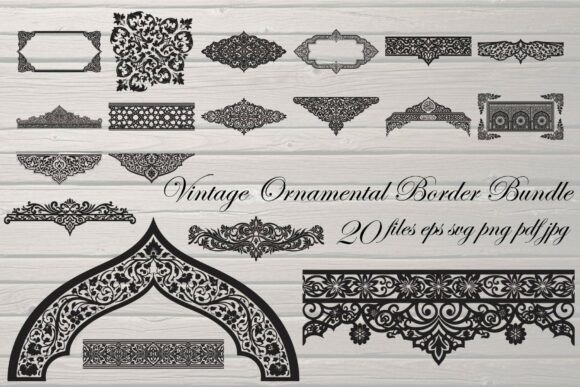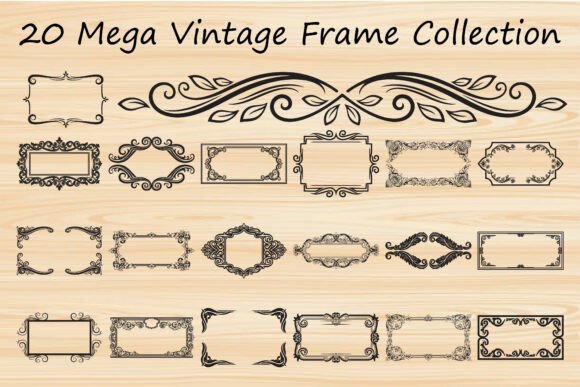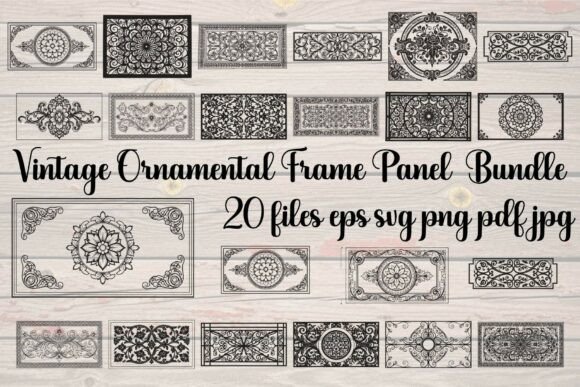
Vintage Ornamental Frame Panel Bundle
First Impressions: Elegant, Balanced, and Quietly Confident
Opening the Vintage Ornamental Frame Panel Bundle feels like flipping through a well-preserved 19th-century botanical ledger—delicate but deliberate, ornate without being fussy. These aren’t busy filler graphics; they’re thoughtfully composed frames and panels built around classic floral motifs, subtle scrollwork, and balanced negative space. The mood is refined heritage—not costume-y nostalgia. As a designer who’s stitched hundreds of client projects, I immediately notice how the proportions breathe: generous outer borders, intentional inner margins, and rhythmic repetition that reads clearly at 3–4 inches wide. That tells me this bundle was drafted with real embroidery in mind—not just as Illustrations for screen display.
A Real Project Test: Embroidering a Linen Kitchen Towel Set
Last week, I used one of the medium-sized panels from the Vintage Ornamental Frame Panel Bundle to embroider a set of linen tea towels for a local boutique launch. No digital mockups first—I went straight to fabric. Why? Because what looks graceful on screen often fights back under needle and thread. The panel stitched cleanly on midweight linen with tear-away stabilizer and standard 40-weight rayon. Satin stitch edges held crisp definition, fill stitches settled evenly, and the open floral centers avoided the “muddy” look that plagues dense vintage patterns. Customers responded strongly—not just to the design itself, but to how *finished* it felt. One buyer said, “It doesn’t look handmade in a ‘trying too hard’ way—it looks like something heirloom-quality.” That’s the quiet power of this bundle: it elevates the handmade product without shouting.
Where It Shines (and Where It Needs Care)
The Vintage Ornamental Frame Panel Bundle excels in applications where elegance and intention matter most:
- Custom apparel: Works beautifully on sweatshirt cuffs, tote bag corners, or apron pockets—especially when scaled to 2.5–3.5 inches. The frame structure anchors the garment visually without overwhelming it.
- Baby embroidery: Soft florals and open layouts translate well to onesies and burp cloths—just avoid the most intricate corner scrolls on ultra-thin cotton interlock.
- Embroidered patches: Clean outer edges and moderate stitch density make these ideal for sew-on or iron-on patches. They hold up through laundering better than tightly packed fill-stitch motifs.
- Holiday and wedding gifts: The timeless tone avoids seasonal cliché. I’ve used one as a monogrammed pillow cover for a bridal shower—stitched in ivory thread on oatmeal linen—and it read as both personal and polished.
- Etsy listings and small shop products: These designs lend instant cohesion to a collection. Pair two different panels across tea towels, napkins, and aprons, and your shop gains visual consistency—no custom illustration needed.
But let’s be direct: this isn’t a grab-and-go file for every surface. Use caution with:
- Small hoop sizes (under 4”): Some panels include fine interior detailing that may lose clarity below 3 inches. Always test stitch a corner section before committing.
- Stretchy or textured fabrics: On knits or bouclé, the outer frame lines can waver if stabilizer choice isn’t precise. A light cutaway + topping combo helps immensely.
- Dark fabric backgrounds: The delicate inner flourishes rely on contrast. Test thread colors—not just black/white, but charcoal, deep navy, or moss green—to preserve legibility.
- Curved surfaces (caps, curved pillow fronts): Stick to the simpler, more symmetrical frames. Avoid panels with asymmetrical vines or off-center blooms—they’ll distort.
- Frequent-wash items (baby blankets, kids’ tees): Review stitch density. If fill areas feel heavy or layered, consider simplifying with running stitch outlines instead of full satin coverage.
What It Adds to Your Craft Business—Beyond the Stitch
For Etsy sellers and small shop owners, the Vintage Ornamental Frame Panel Bundle isn’t just another embroidery file—it’s a trust signal. When customers see clean, balanced framing on a personalized gift, they subconsciously register care, experience, and attention to proportion. That perception lifts perceived value, supports higher pricing, and reduces returns due to “not what I expected.” I’ve watched buyers linger longer on listings using these panels—not because the design is flashy, but because it feels *resolved*. That matters for brand consistency, especially if you offer coordinated home goods or apparel collections.
Practical Designer Notes Before You Stitch
Before adding the Vintage Ornamental Frame Panel Bundle to your next project, do these five things:
- Test the design on scrap fabric *exactly* like your final material—same weight, weave, and stretch.
- Check thread color contrast in natural light *and* on camera. What reads softly on screen may vanish on dark denim.
- Review stitch density in your embroidery software. If fill areas exceed 18–22% density, consider reducing or switching to a lighter fill pattern.
- Confirm hoop size compatibility. Some panels are optimized for 5x7 hoops; others scale gracefully to 4x4—but verify before hooping.
- Inspect small details at 200% zoom: tiny leaves, petal tips, and scroll ends should be distinct, not merged or jagged.
Also: run a black-and-white printable mockup to assess tonal balance. And always double-check licensing—especially if you plan to sell finished embroidered products or resell digital embroidery files. Since this is categorized as Graphics, confirm whether commercial use is included or requires separate permission.
Final Thought: Design That Serves the Maker, Not Just the Machine
The Vintage Ornamental Frame Panel Bundle stands out because it respects the full workflow—from screen to stabilizer to customer’s hands. It doesn’t assume you’ll fix its flaws in post-stitching. It assumes you’re thoughtful, time-conscious, and proud of how your work presents. Whether you’re stitching a single personalized gift or building a cohesive line for your craft business, these frames don’t distract. They dignify. And in a market flooded with loud, algorithm-friendly graphics, that kind of quiet strength is rare—and commercially smart.