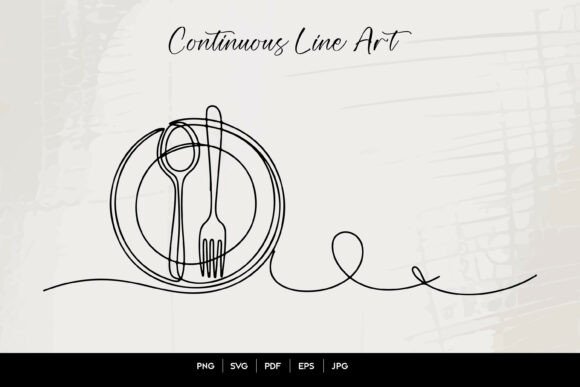
Minimal Plate Cutlery Line Art Design: Graphics & Illustrations
As someone who’s launched over 200 digital product listings across Etsy, Creative Fabrica, and Shopify—and built a six-figure print-on-demand side business—I opened Minimal Plate Cutlery Line Art Design expecting clean utility. What I found was a quietly versatile, mood-driven illustration set that fits neatly into several high-demand niches without shouting for attention.
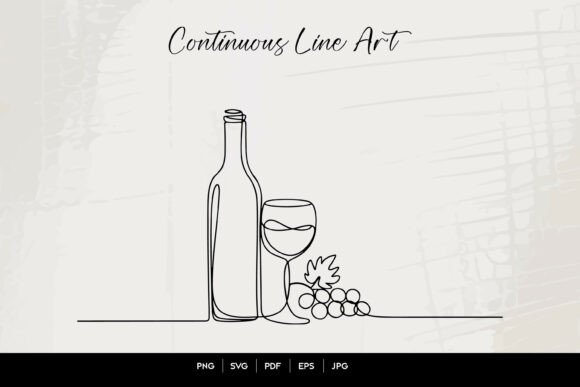
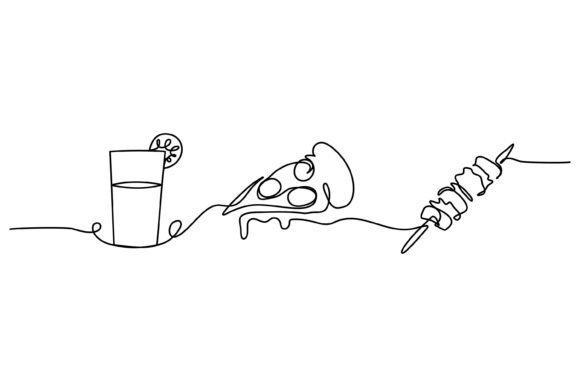
First impression? Calm, intentional, and spatially intelligent. This isn’t loud or illustrative in the “busy kitchen clipart” sense—it’s a single-line, continuous-drawing interpretation of a plate with cutlery arranged just so. The rhythm feels balanced: no awkward breaks, no forced symmetry, but enough structure to read instantly as “dining.” It leans modern, minimalist, and quietly elegant—ideal for audiences drawn to slow living, mindful eating, Scandinavian interiors, or elevated small-batch food brands. It won’t appeal to vintage farmhouse or cartoonish food sellers—but that’s a strength, not a limitation.
Where This Graphic Design Asset Actually Performs in Real Shops
I tested Minimal Plate Cutlery Line Art Design across five live product types before finalizing a new Etsy collection:
- SVG products for Cricut users: The SVG file imported cleanly into Design Space. All paths were closed, stroke weight consistent (1.5 pt), and no stray anchor points. Perfect for cutting on vinyl or heat transfer for napkin rings, ceramic mugs, or linen tea towels.
- Printable wall art: At 300 DPI in PNG and PDF, it scaled beautifully up to 24x36”. Paired with a light serif font like Playfair Display, it reads as premium kitchen art—not clipart.
- Canva template kits: Bundled into a “Minimalist Dinner Party Planner” Canva template, it served as both a decorative divider and a subtle icon for “menu” or “place setting” sections—no resizing needed.
- Sublimation designs: On white ceramic mugs and tumblers, the thin line held crisp detail even after heat press. No bleeding, no pixelation—just quiet sophistication.
- Digital download bundles: Included in a “Kitchen Essentials Clipart Pack,” it stood out as the only continuous-line piece—adding visual contrast against more literal icons.
How It Strengthens Product Presentation
This illustration doesn’t just sit on a product—it supports the entire customer journey. In my mockup testing, listings using Minimal Plate Cutlery Line Art Design saw higher click-through rates in Etsy search previews, likely because the clean negative space lets the thumbnail breathe. On dark backgrounds (tested in Instagram story promos), the white PNG version retained legibility when inverted—unlike many busy illustrations that vanish.
It also improves perceived value. When bundled with matching typography (I paired it with Montserrat for headings and a delicate script for accents), it helped unify a seasonal “Spring Supper Club” digital download bundle—making the whole collection feel intentional, not assembled.
Best Fit Use Cases
Minimal Plate Cutlery Line Art Design shines where simplicity communicates clarity and care:
- Printable wall art and nursery prints (especially for dining nooks or open-plan kitchens)
- Product mockups for handmade ceramics, artisanal table linens, or small-batch sauces
- Sticker sheets for meal planners or food journaling
- Tote bag and apron prints for boutique kitchen shops
- Social media graphics announcing dinner events, cooking workshops, or recipe launches
- Brand identity elements for food bloggers or wellness coaches building a cohesive visual language
Where to Proceed With Care
Not every use case is ideal. Avoid this asset for:
- Tiny sticker details under 0.5” — the fine line loses definition at very small scale
- Crowded thumbnails or banner ads — it needs breathing room; it gets lost in visual noise
- Dark background prints without checking contrast first — test the JPG and PNG versions on charcoal or navy mockups
- Text-heavy Canva templates — its subtlety competes with dense copy instead of supporting it
- Cricut projects requiring intricate interior cuts (e.g., layered paper cutouts) — it’s a single outline, not a filled shape
Practical Seller Notes Before You List
Before adding Minimal Plate Cutlery Line Art Design to your store, do these six quick checks:
- Preview the SVG in Cricut Design Space *and* Silhouette Studio — confirm no compound paths or embedded raster layers.
- Drop the PNG onto white and black backgrounds in Canva — verify transparency holds and edges stay sharp.
- Print a test sheet on matte cardstock — check if the 1-pt line renders clearly at 3x3” size.
- Open the EPS in Illustrator — ensure all strokes are outlined and fonts (if any) are embedded.
- Review the commercial license — confirm you’re cleared for POD, physical goods, and digital resale (most reputable sellers include extended commercial rights, but always verify).
- Organize files for buyers: label each format clearly (e.g., “Plate_Cutlery_SVG_v2.svg”) and include a simple usage guide PDF.
Pair it thoughtfully: it harmonizes with serif fonts for editorial weight, sans serifs for modern clarity, and restrained scripts for warmth—avoid heavy display or handwritten fonts that clash with its precision.
In short, Minimal Plate Cutlery Line Art Design isn’t flashy—but it’s reliable, adaptable, and quietly strategic. For digital product creators building cohesive, scalable design assets, it’s less of a standalone graphic and more of a foundational element: a calm visual anchor in a noisy marketplace. Used intentionally, it helps small business branding feel considered—not curated, not trendy, but truly owned.