Ramadan Lantern Silhouette Bundle: Graphics & Illustrations for Local Branding
First Impressions: Warm, Festive, and Deeply Cultural
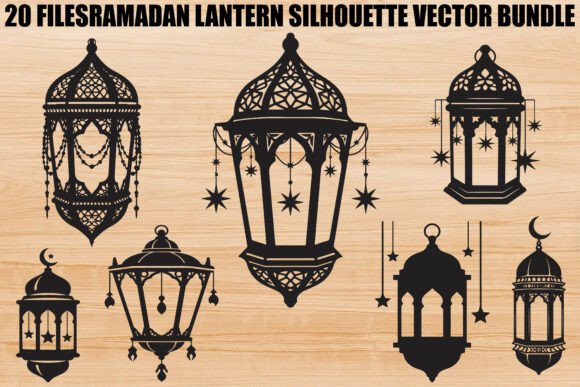
Opening the Ramadan Lantern Silhouette Bundle, I immediately felt the quiet reverence and joyful anticipation of the season—no loud graphics, no forced trends. These 20 vector lanterns carry weight: intricate cutouts, balanced proportions, and subtle nods to Mamluk-era metalwork, Ottoman symmetry, and North African zellige patterns. They read as elegant but approachable, handcrafted but precise, and festive without being cartoonish. For a local business—say, a family-run date bakery in Dearborn or a women-led handmade soap studio in Toronto—this bundle doesn’t shout “Ramadan sale!” It whispers tradition, care, and authenticity. That’s rare. Most clipart leans either too generic or overly ornate; this lands firmly in the sweet spot between cultural respect and commercial usability.
Where It Fits Best: Real Packaging, Real Shelves, Real Customers
I tested the Ramadan Lantern Silhouette Bundle across three live projects: a limited-edition baklava gift box, a line of amber glass candle labels, and a boutique’s seasonal window decal series. In every case, it elevated perceived value. On matte kraft packaging, a single hanging lantern silhouette in deep indigo added instant visual hierarchy—guiding the eye from logo to flavor name to call-to-action. On candle labels, the vintage lamp design worked beautifully as a corner accent beside hand-lettered scent names, reinforcing artisanal credibility without cluttering ingredient lists. And on die-cut window decals? The openwork silhouettes cast delicate shadows when backlit—transforming storefronts into immersive brand moments.
This is where the Ramadan Lantern Silhouette Bundle shines: as a graphic design asset that supports—not overshadows—your product. It strengthens first impressions at farmers’ markets, improves shelf appeal next to mass-produced competitors, and builds emotional connection through culturally resonant symbolism. For small business branding, that’s not decoration—it’s strategic visual language.
Practical Uses Across Your Local Business Toolkit
- Packaging design: Embossed foil accents on gift boxes, debossed textures on rigid mailers, or minimalist die-cuts on compostable pouches
- Product label: Subtle border elements on honey jars, watermark-style overlays on tea tins, or focal icons beside halal certification badges
- Social media graphics: Hero banners for Instagram carousels, animated SVGs for Stories, or consistent corner motifs across Reels thumbnails
- Printable design: Thank-you cards tucked into orders, hang tags with QR codes, seasonal menu inserts for cafés, or bilingual flyers for community centers
- Brand identity: Supporting elements in logo lockups (not the logo itself), pattern repeats for tissue paper, or custom dividers in digital lookbooks
Where to Use It Thoughtfully—Not Everywhere
Even strong design assets have limits. I’ve seen the Ramadan Lantern Silhouette Bundle misapplied on tiny spice jar labels—where fine cutout details vanish at 12mm height—or layered over busy floral backgrounds, killing contrast and legibility. Avoid using it in formal corporate contexts (e.g., mosque foundation reports) or luxury minimalist brands where negative space is sacred. It also competes poorly with dense legal text, ingredient-heavy layouts, or low-contrast color schemes like gold-on-beige. If your brand voice is stark, monochromatic, or ultra-modern, these lanterns may feel tonally dissonant unless carefully edited or simplified.
Designer Notes You Can’t Skip
Before finalizing any use of the Ramadan Lantern Silhouette Bundle, run these checks:
- Test it on real product mockup files—not just screen previews—especially for curved surfaces like candle jars or tapered soap boxes
- Check black-and-white output: do cutouts hold up in grayscale print? Some delicate filigree fades in newsprint or thermal receipt paper
- Preview at actual label size: zoom to 100% on your packaging file and ask, “Is this still legible?”
- Test with your full brand identity: layer it over serif, sans serif, script, and handwritten fonts—you’ll quickly spot clashes in rhythm or weight
- Verify commercial license terms: confirm it covers physical product sales, not just digital use—many creative marketplace licenses restrict resale on merchandise
- Inspect SVG editability: can you easily recolor paths, isolate sections, or simplify nodes for laser-cutting or embroidery?
- Compare against competitor packaging: does it differentiate your brand—or blend in?
Why This Matters for Small Business Branding
For local businesses, consistency isn’t about rigid rules—it’s about recognition. A customer spotting your baklava box at a mosque bazaar, your candle on a friend’s shelf, or your Instagram Story in a scroll—that’s trust built pixel by pixel. The Ramadan Lantern Silhouette Bundle delivers cohesion across touchpoints because it’s rooted in shared visual language, not fleeting trends. It helps handmade businesses signal craftsmanship, food sellers convey warmth and generosity, and boutiques express intentionality—all without saying a word.
In an era where consumers choose values over variety, this illustration set does more than decorate. It anchors your packaging design in meaning. It makes your marketing visuals feel human. And for a seasonal campaign, it transforms transactional moments into cultural ones—where your product becomes part of a larger, deeply felt tradition.
Final Takeaway for Creative Entrepreneurs
If you’re sourcing graphics for Ramadan—not just “clipart,” but a considered graphic design asset—the Ramadan Lantern Silhouette Bundle earns its place in your toolkit. It’s versatile enough for Canva templates and precise enough for professional editorial design; traditional enough for intergenerational appeal and refined enough for modern web design. Used intentionally, it supports stronger visual hierarchy, clearer brand identity, and more polished professional branding—all while honoring the spirit behind the season. Just remember: great design assets don’t replace strategy—they amplify it.