Vintage Circus Clipart Elements
First Impressions: Whimsy with Weight
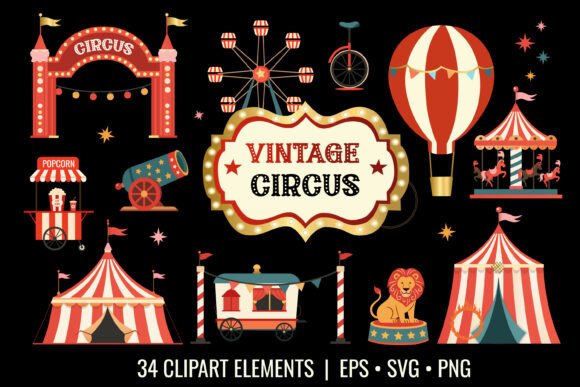
Opening Vintage Circus Clipart Elements feels like flipping through a well-loved 1940s carnival program—warm, slightly weathered, and full of character. These aren’t cartoonish or overly sweet; they’re grounded in authentic retro illustration: bold outlines, balanced negative space, and subtle texture cues that translate beautifully into stitch. Think popcorn carts with hand-drawn steam swirls, striped tents with visible seam lines, and vintage ticket stubs with serif type that breathes—not shouts. As an embroidery designer who’s stitched hundreds of themed collections, I immediately sensed this set’s strength: it’s *designed for translation*, not just display. The shapes hold up at medium scale (3–5 inches), the curves are smooth but not fussy, and the 34 elements include smart variations—three distinct circus tents, two types of popcorn buckets, multiple banner styles—that let you build cohesive, non-repetitive designs without mixing external assets.
A Real Project Test: Embroidering a Boutique Tote Bag
Last week, I prepped a custom order for a local gift shop: six linen-cotton blend tote bags, each featuring a different Vintage Circus Clipart Elements motif centered on the front panel. I chose the “Circus Wagon” design—clean profile, strong wheel detail, open cargo area—because it offered enough visual interest for stitching but avoided fragile linework. On the tote, it stitched cleanly at 4.2 inches wide using standard tear-away stabilizer and 40-weight rayon thread. The satin-stitch wheels popped, the fill-stitch wagon body stayed crisp, and the running-stitch accents (like rope trim) read clearly without bleeding. Customers loved the nostalgic charm—but more importantly, they trusted the craftsmanship. That trust comes from clarity: when every curve and corner holds its shape in thread, your handmade product reads as intentional, not improvised.
Where It Shines—and Where to Pause
Vintage Circus Clipart Elements works especially well for:
- Custom apparel — sweatshirt embroidery and t-shirts benefit from its bold silhouettes and moderate detail density; no ghosting or skipped stitches even on midweight fleece.
- Embroidered patches — the clean edges and consistent line weight make it ideal for sew-on or iron-on patches used on aprons, caps, or denim jackets.
- Baby embroidery — motifs like the balloon cluster or sleeping lion are gentle enough for onesies and burp cloths, provided you reduce size to 2.5 inches and use soft-cutaway stabilizer.
- Holiday and wedding gifts — a vintage popcorn bucket stitched onto a tea towel or pillow cover adds warmth without kitsch, especially when paired with neutral thread colors.
- Etsy listings and small shop products — because these are vector-based Illustrations, they scale cleanly for digital embroidery file previews, printable mockups, and social media banners—supporting your craft business across touchpoints.
Use caution with:
- Small hoop sizes (under 3 inches) — fine details like the striped awning on the “Candy Stand” element compress poorly; simplify or omit at tiny scale.
- Textured or stretchy fabric — on terry cloth towels or ribbed knit caps, opt for bolder motifs (e.g., the “Big Top Tent”) and avoid delicate flourishes like banner fringe.
- Dark fabric backgrounds — test thread color contrast early; light cream or mustard threads often read better than stark white on navy or charcoal.
- Frequent-wash items — avoid dense fill-stitch areas on baby blankets or kitchen towels unless you reinforce with proper stabilizer and secure thread ends.
Design Judgment: Beyond Aesthetics
What makes Vintage Circus Clipart Elements stand out isn’t just charm—it’s coherence. As a designer reviewing Graphics for real project use, I looked for consistency in stroke weight, spacing, and visual hierarchy. All 34 elements share the same underlying rhythm: no stray thin lines, no inconsistent corner radii, no mismatched shadow directions. That uniformity means your finished product feels curated, not assembled. For Etsy sellers, that cohesion builds brand consistency across listings—imagine a series of nursery decor items (pillow covers, wall hangings, growth charts) all anchored by the same tent or lion motif. For apparel decorators, it means fewer client revisions: the design arrives production-ready, not “almost there.” And for hobbyists making personalized gifts? It removes guesswork—you know the lion’s mane will stitch as cleanly as the popcorn bag’s crinkle lines.
Practical Embroidery Designer Notes
Before stitching your first piece:
- Test Vintage Circus Clipart Elements on scrap fabric matching your final project’s weight and weave.
- Check thread color contrast—not just on white, but on your actual dark or colored fabric.
- Review stitch density in tight areas (e.g., the lion’s ear or banner lettering); adjust underlay if needed for stability.
- Confirm hoop size compatibility—some larger motifs (like the full “Circus Parade” banner) may require a 5x7 hoop or larger.
- Inspect small details at 200% zoom in your embroidery software—look for unintended overlaps or gaps that won’t digitize cleanly.
- Preview in black-and-white mockups to assess value contrast and legibility without color distraction.
- Use appropriate stabilizer: cut-away for knits, tear-away for stable wovens, and wash-away for delicate applique layers.
- Verify licensing terms before selling finished products or bundling as digital embroidery file assets—this is essential for commercial embroidery and craft business use.
Vintage Circus Clipart Elements doesn’t try to be everything. It’s not ultra-modern, not minimalist, not hyper-detailed. It’s confidently, thoughtfully retro—and that focus is its greatest asset. Whether you’re stitching a one-of-a-kind baby gift, building a boutique’s seasonal collection, or creating embroidery project kits for fellow makers, this set delivers reliable, evocative, and stitch-smart design assets. It earns its place in the toolbox—not as decoration, but as dependable creative infrastructure.